
Defining Margin and Markup
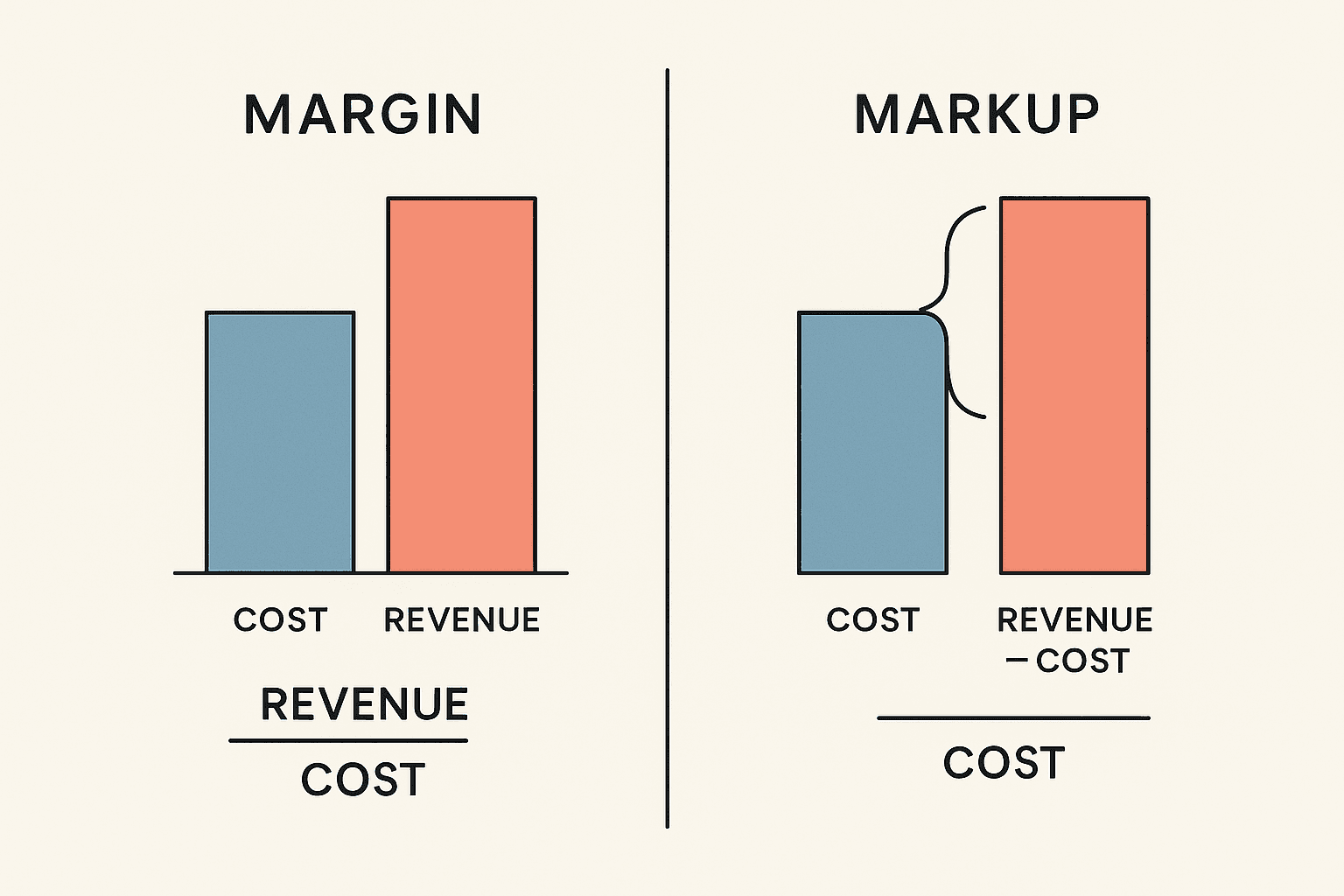
Margin and markup are two fundamental concepts in pricing strategies that are often confused. Margin refers to the difference between the cost of a product and its selling price, expressed as a percentage of the selling price. Conversely, markup is the amount added to the cost price of goods to cover overhead and profit, expressed as a percentage of the cost price. Understanding these definitions is crucial for businesses aiming to set competitive prices while ensuring profitability.
Calculating Margin: A Practical Example
To illustrate the concept of margin, let’s consider a company that sells handmade furniture. Suppose the cost to produce a chair is $200, and the selling price is set at $300. The margin can be calculated using the formula: Margin = (Selling Price - Cost) / Selling Price * 100 Plugging in the numbers: Margin = ($300 - $200) / $300 * 100 = 33.33% This means that 33.33% of the selling price is profit, which is crucial for the business to cover fixed costs and reinvest.
Calculating Markup: A Practical Example
Now, let’s calculate markup using the same example of the handmade chair. The markup is calculated as follows: Markup = (Selling Price - Cost) / Cost * 100 Using our figures: Markup = ($300 - $200) / $200 * 100 = 50% This indicates that the company has marked up the chair by 50% over its cost, which directly influences pricing strategies and perceived value in the market.
Key Differences Between Margin and Markup
Understanding the difference between margin and markup is essential for effective pricing strategies. While margin focuses on the profit as a percentage of the selling price, markup emphasizes the profit as a percentage of the cost. For instance, if a product costs $100 and is sold for $150, the margin would be 33.33%, while the markup would be 50%. This distinction can significantly affect pricing decisions and profitability analysis. Businesses often use tools like the /margin-calculator and /markup-calculator to simplify these calculations.
When to Use Margin vs. Markup
The choice between using margin or markup often depends on the industry and the specific financial goals of a business. Retailers may prefer markup to ensure they cover costs and achieve desired profit levels, while manufacturers might focus on margin to assess profitability relative to sales. For example, a retailer selling electronics might apply a 20% markup on a product that costs $250, leading to a selling price of $300. In contrast, a manufacturer may calculate that a 40% margin is necessary to sustain operations.
Conclusion: Making Informed Pricing Decisions
In conclusion, both margin and markup are vital for pricing strategies, yet they serve different purposes. By understanding how to calculate and apply both concepts, businesses can make informed decisions that enhance profitability and competitiveness. Utilizing tools like the /margin-markup-converter can help in transitioning between margin and markup calculations, ensuring that businesses can adapt their pricing strategies as needed.